Spring Snook Bait Tactics
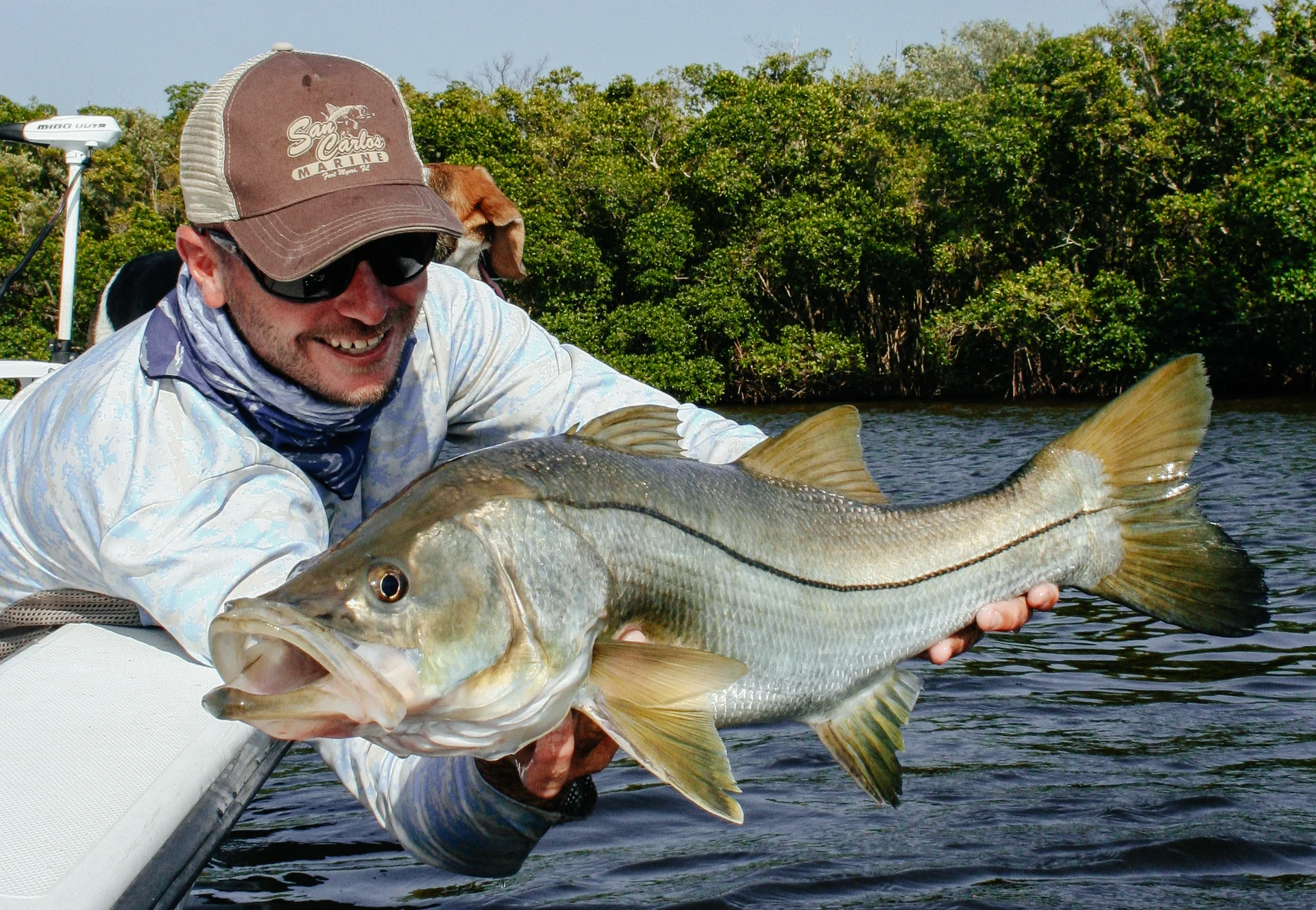
A fearsome gamefish, snook take no prisoners. Ask any angler who’s been subjected to a trophy snook’s aerial jumps razor bladed off by their gill plates to part ways. Breezy springtime climates in Key Largo and Everglades Bay create turbid water conditions but offer up a primo chance to target snook as they begin to activate and feed on the warmth of an impending summer.
MUDDY WATERS
“April and May, winds are usually whipping in Key Largo,” said Captain Bruce Davis of Tru Blu Charters. “Dirty waters are the norm in springtime, putting snook on a scent feed and we adjust to the conditions by tossing baits out to work the mangroves, channels and backpockets inside Florida Bay and Everglades Bay.”
Davis pulls up on the leeward side of windblown mangrove island shorelines on an outgoing tide to fish deep pockets off the points. “If the waters are clear with little to no wind, snook will hunker down way inside the mangrove roots for cover, but when the water is murky and dirty, snook will lose their sense of fear and forgo the protection of the roots and patrol 20 to 30 feet outside the shorelines to intercept mullet schools in 2 to 3 feet of water.”
Water temperature plays an integral part in choosing tactic and technique. “The sweet spot temp range is 68 to 75 degrees,” said Davis. “When water is 67 and below in April and May, we opt for chunk baits and shrimp as fish are more sluggish. Over 70 degrees, we can begin to throw jerkbaits and paddletails to get strikes.”
GOING LIVE
Live bait fishing is a no-brainer tactic for a hookup in the turbid waters of springtime as fish feed on using their sense of smell. “Snook are on the scent feed when visibility is low. Live pilchards or shrimp are the go-to meals as they put out that electric vibration,” said Davis. His rigs can vary. A clack popper float with a 1-1/2 to 2- foot 30-pound fluorocarbon leader and a jig head tipped with a live pilchard hooked through the belly or nose, or a live pinfish is cast against the mangrove ledge, or submerged snag. “Drift the rig past the snags, over the ledge, or off a point. Once the float goes down, give it a 2 count before you engage the reel for the hookset.”
CHUNK SCENTS
When waters are super muddy, Davis goes to chunk baits on a fishfinder slide rig with a 1/4 -ounce egg sinker above a barrel swivel, then the leader is snelled to a 3/0 to 4/0 Mustad Demon Perfect Inline circle hook. Davis opts for 40 to 50-pound fluorocarbon leader, though in clear, clean waters, he will dial down to 30-pound, but not go any lower in fear of the snook's sharp gill plates severing the line. “Cut a 2 to 4 finger chunk of ladyfish or even ballyhoo and hook it through the backfat, cast up against the shoreline as close as you can get to the roots,” said Davis. “If the water is clean with good visibility, I really try to get that chunk bait way back inside the pockets of the mangroves as snook are skittish and won’t come out from the protection of the root systems.” Any time fishing sticky shorelines, braided line on reels such as 30 to 50-pound Demon Perfect® Braid is the top choice to muscle snook out quickly from their mangrove lairs. A pair of Mustad Aluminum Fishing Pliers allows for a quick unhooking and release.
Dial up some spring snook, put the chunks and livies out to tempt a strike in springtime’s cooler, windy waters.


