WIN WITH WINTER SHEEPSHEAD
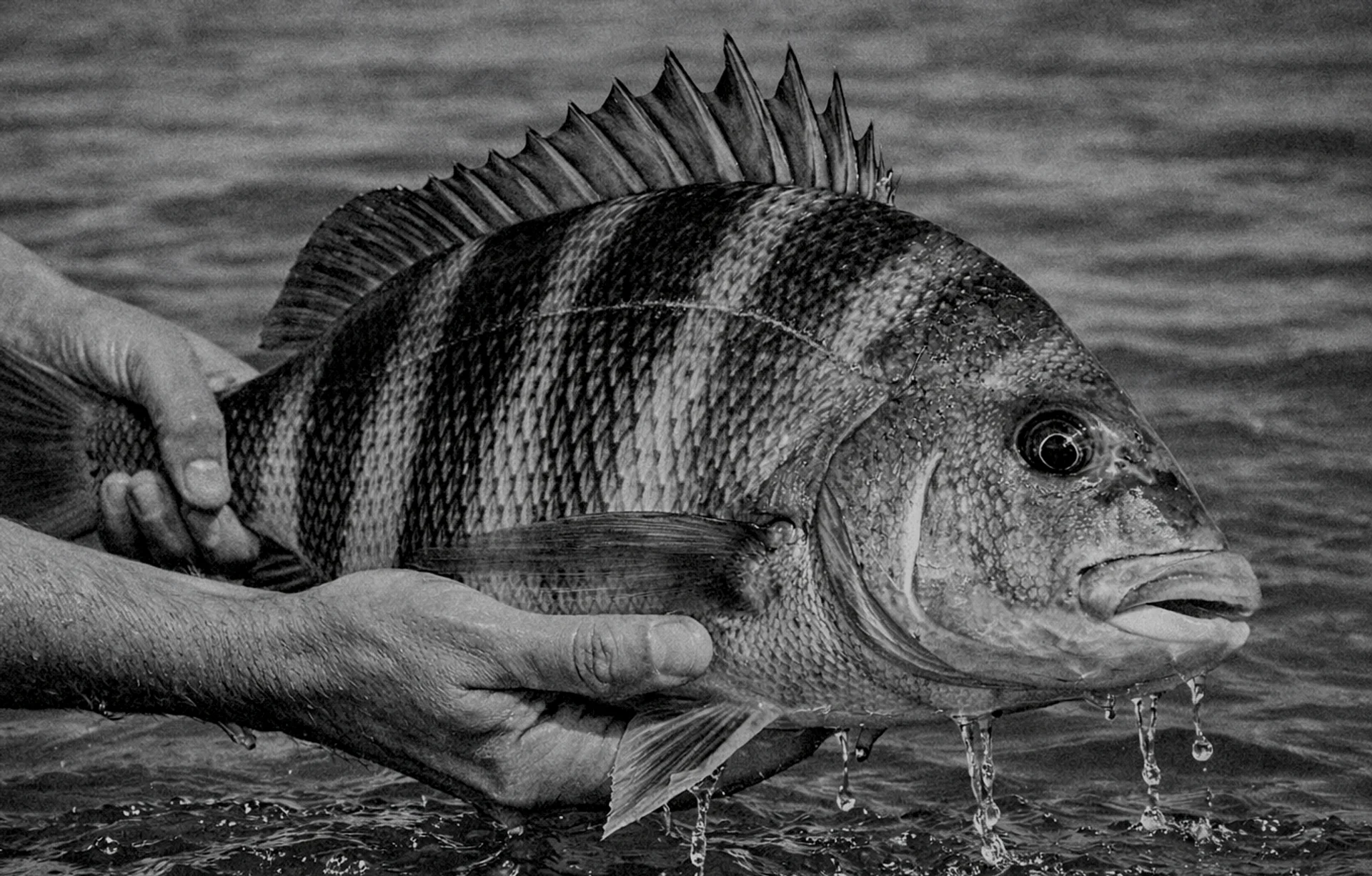
Take a peek over a pier, bridge, or dock handrail and you’ll often see the distinct black and white stripes of a prized southern saltwater fish feeding around hard structure. That top-shelf species is the sheepshead — a popular food fish with equally enticing sport appeal. Sheepshead are abundant, but they’re not pushovers. A handful of dos and don’ts will tilt the odds in your favor.
DO try a selection of natural baits. Fresh shrimp interests most saltwater fish, but the sheepshead’s broad front teeth often nip at the relatively soft bait until it’s gone. Small pieces are best and covering just the hook point is a helpful strategy.
One of the most consistently productive sheepshead baits is the fiddler crab. Collect them on quiet beaches and tidal flats or just buy them at the local bait shop, but a sharp Mustad Octopus Hook set through the outer point of a fiddler’s shell presents an irresistible snack.
Locally collected oysters, mussels or clams also make great sheepshead bait, as the meat is sturdier than shrimp. Also, toss those shells in the water after shucking to release fish-tempting scent.

DON’T let slow reflexes waste your opportunities. The old saying: “Set the hook before a sheepshead bites” may be unrealistic, but the principle is rooted in real-world application. Sheepshead are built for nibbling at barnacles, other mollusks, and crustaceans, so they’re known for sharp, rapid bites.
Generally, the first bite is intended to crush a shell, with a follow-up bite gobbling the vulnerable meat. Unlike a snook or redfish, which will gulp a bait and immediately come tight on your line, sheepshead are annoyingly quick with their brief, surgical nibbles.
Your best bet is to pay constant attention, keep your hand on the reel handle, and give the fish a sharp hook set at the first tingle of bite pressure. If you miss, no biggie, just drop the bait back to the strike depth. Sheepshead tend to cluster around food-rich areas, so another chance usually follows fairly soon.
DO vary your rigging. A standard fishfinder rig can work when sheepshead are close to the bottom, but around rock reefs and oyster bars, rigging your baits on a Mustad Shrimp Jig Head keeps the package tight and manageable. When sheepshead are higher off the bottom, a Mustad No-Twist Dropshot Rig offers a convenient option.


DON’T confuse sheepshead with juvenile black drum. Adult drum have a dingy grayish tone, but the little ones often sport dark vertical bars that can cause anglers to confuse them with sheepshead.
The clear giveaways start at the front. The drum has fleshy barbels on its chin, which help it detect bottom-oriented meals, while the sheepshead has a smooth chin and unmistakably protruding sheep-like teeth.
Also, the sheepshead has a forward-facing mouth, while the drum’s mouth faces down. Another one — the drum has a taller primary dorsal fin, followed by a long, lower secondary dorsal. The sheepshead has a longer primary dorsal fin spiked with thick, sharp rays that look more like pointy knitting needles.
DO: Keep a couple of the incredibly tasty sheepshead for dinner. Sheepshead hold such high regard among anglers fishing for table fare that some actually refer to those firm, white filets as “poor man’s lobster.”
Just know that sheepshead have pretty thick skin, so trust the sharpness of a Mustad Premium Filet Knife.
