3 TOP TACTICS FOR STRIPED BASS
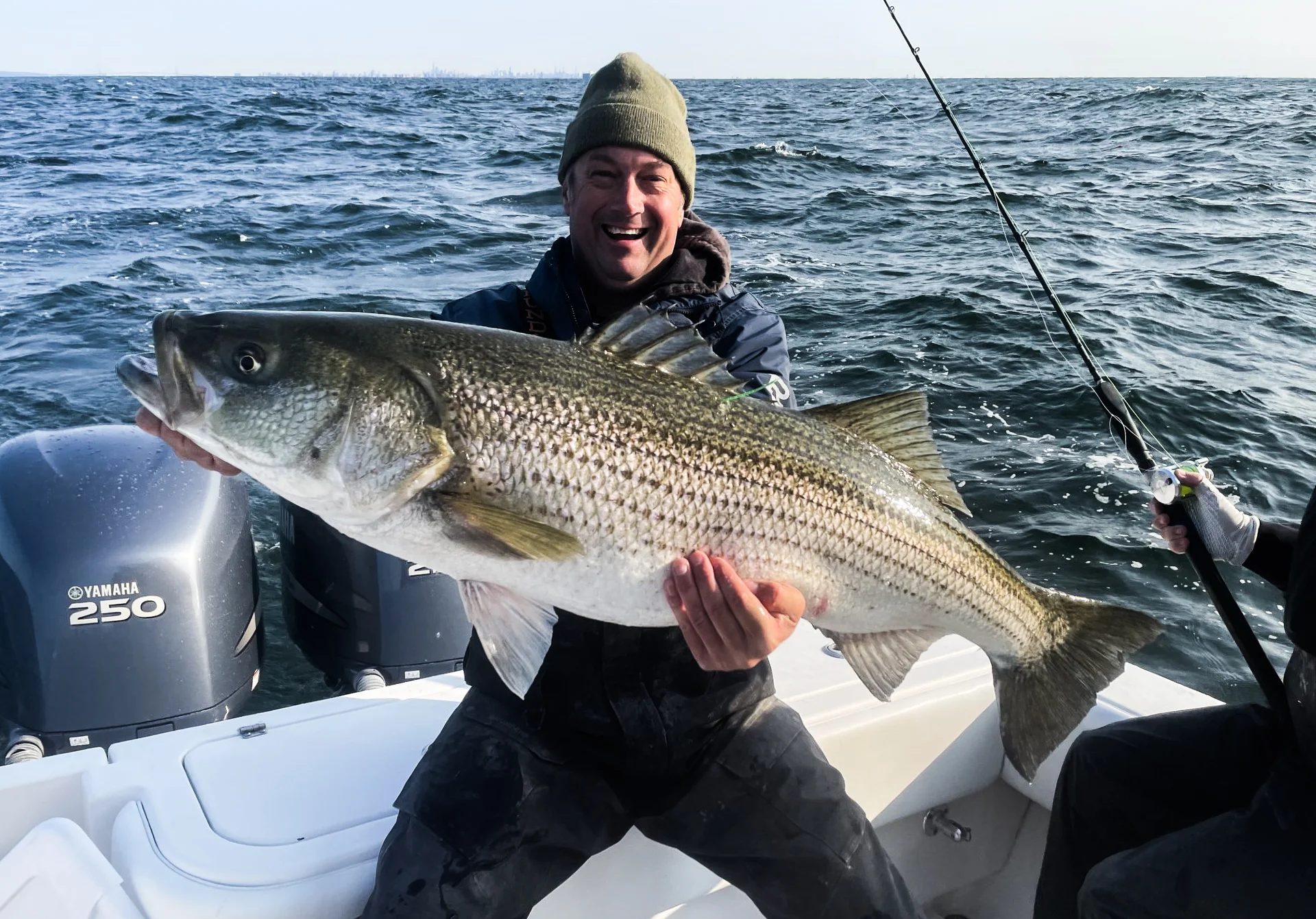
Throughout the Northeast and Mid-Atlantic, striped bass are pursued with passionate fervor, sparking anglers from surf to sea to chase the major migratory run from spring through fall. Captain Jim Freda of Shore Catch Guide Service, based in New Jersey, dials up linesiders using a variety of tactics to cajole a strike from any wandering striper. Top to bottom, swimming plugs, soft baits, and metal jigs command attention from feeding fish.
PLUGGING
“When water temperatures hit 58 to 60 degrees in mid-spring, stripers wake up and exponentially become more active in pursuing their food forage, which makes for perfect plugging conditions,” said Freda, “Aggressive hits occur when stripers push menhaden to the surface to attack from below.” Plugs like the Oto Diving Pencil effectively mimic the profile of larger baitfish, with the key being to present the plug as a fleeing or injured fish to elicit a strike. Plugs can be worked with a “walk the dog” style cadence, a steady back and forth side-to-side swim on or near the surface when fish are actively feeding up top. If bass are holding deeper, larger lipped plugs can dig in to dive between 3 to 8 feet deep and be presented with a moderate, steady reel. Freda’s preferred color patterns for plugs are chartreuse, yellow, white, and silver.


SOFT BAITS
Oceanside in late spring and summer, bass can hold down deeper along the bottom, prompting the switch to soft baits and jigs to grab their attention. “Pay strict attention to the fishfinder screen to mark the exact depths fish are staging,” notes Freda. “Stripers can suspend anywhere in the water column from top to bottom, and your jigs will notably get hit at those exact depths, so you have to be wary to either drop straight to the bottom and bounce tap jigs, or you may have to take 4 or 5 cranks in and begin to swing jig to be in the zone.”
For jigging, Freda employs 40 to 50-pound XP Tufline braided line on the reel, FG knotted with a 4-foot top shot of 40-pound XD fluorocarbon leader to which a 175-pound TA Clip is tied on via palomar knot. Large 8 to 10-inch slender soft baits tipped on a 1 to 3-ounce Big Eye bucktail are generally best to use when sweep or swing jigging, as they hold into the current. Five to 9-inch Paddletail type shads can be slow rolled along the bottom, simply rolling them side to side as they project the imitation of a dying bunker bait flailing on the sea floor.
If marking fish at a specific depth, soft baits should be jigged in a vertical manner. “The key is to cast into the wind as the boat is pushing away from you, so the lure catches up to you, and you are directly over it. Employ a tap-tap-tap, drop-drop-drop cadence to get the bait to jerk jig about 1 to 2 feet above the bottom in general or where the fish are marked,” states Freda. “Most times, bass hit on the drop when the jig falls after you twitch it. You want to feed it back to them and allow them to inhale the bait when it drops limp and prepare for an immediate hookset.”
JIGGING METALS
Flashing, erratic movements from wide-profile flutter spoons and metal jigs also spark attention, especially when bunker, sandeels, and herring are the predominant baitfish. Mustad’s Daggerman Jig and Rip Roller or Kroc Spoons are lights out productive when Freda marks a pile of fish under the boat and work especially well during the Fall Run. “You want a more horizontal flutter with the spoon or metal, meaning drop down the spoon to the bottom, then let the line out, hold the rod in hand, and allow the spoon to horizontally flutter behind the boat as you drift away, scope out about 50 yards, almost like a slow troll. The flashing erratic behaviour of a side-to-side wobbling spoon profiles fleeing bunker that bass cannot resist.”
Dial up your tactic and work top to bottom to score with stripers.

