Jigging For Tuna
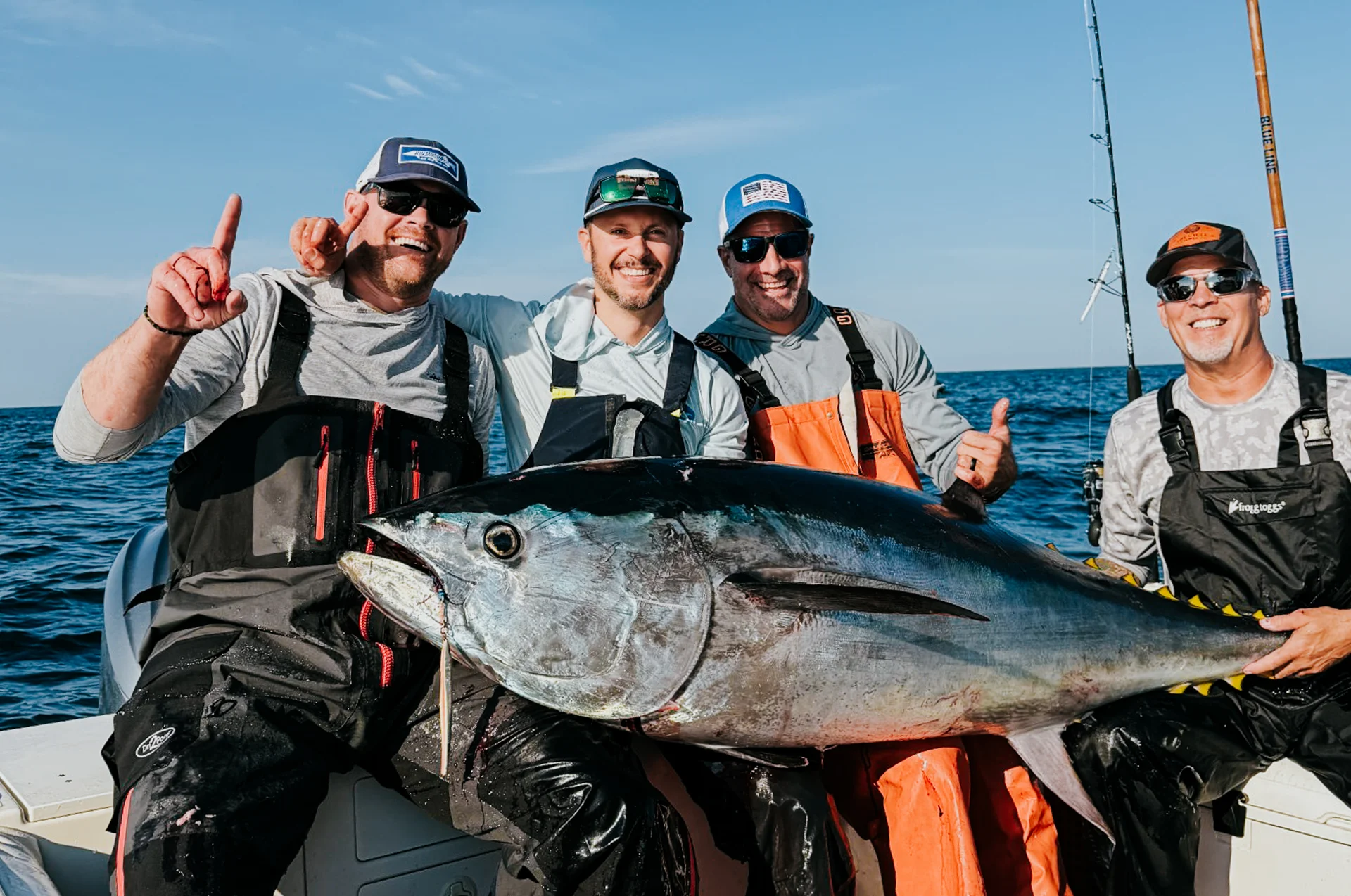
Nothing buckles an angler’s knees like tuna crushing a jig. It's violent, it's sudden, and it’s a knock down drag out fight to the finish where the angler doesn’t always win. Captain Kevin Albohn of Blue Line Sportfishing in Watch Hill, Rhode Island targets bluefin and yellowfin tuna June through October during prime season in the Northeast. While popping, trolling, and chunking work to put tuna on deck, he loves the furious action and bone-jarring strikes of dropping jigs to trick them up.
“Rule number one is to find the right blend of weight and action of the jig,” said Albohn. “Presentation has to be vertical to be believable. Go with the lightest jig possible without creating a lot of scope. If we’re fishing 180 feet of water, generally I’m using 150g jigs, depending on current, I can go up to 200g. The key is not to have too heavy a presentation where the jig is stagnant and heavier metals put a lot of strain on the angler. Find the fit for the perfect blend.”
Albohn swears by the tried and true Mustad Moonriser jig series. “The old-school jig has that long profile that flutters and swims enticingly and pair them with the Kiaju hooks as they absolutely do not rust out and stay sharp use after use.”


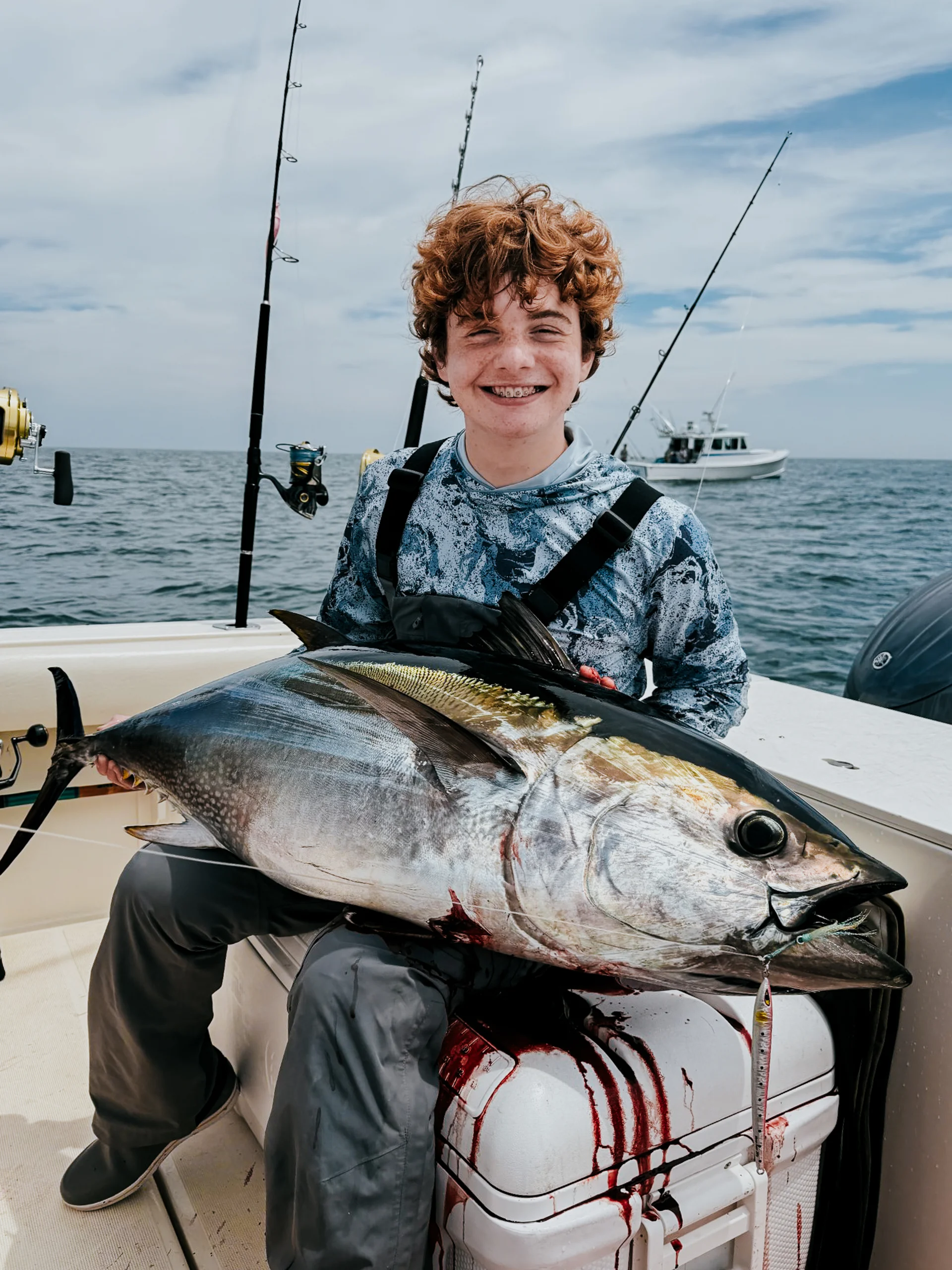
Regarding the cadence of snapping jigs, Albohn lets the bait and tuna movement dictate the methodology. “Cadence is basically a yo-yo 1:1 ratio of cranking the reel and lifting the rod in unison, whether fast or slow. The jigging cadence approach, determining how fast depends how active the fish are. If bait are moving fast, like sand eels or mackerel, make the cadence quick. Slower-moving bait like squid requires a half-speed yo-yo cadence.”
Another sharpie point to note is to pay attention to when the fish are hitting the jig. “Note if fish are hitting the jig on the drop, halfway up, or even on the bottom,” said Albohn. “If they are hitting on the drop, conventional reels give a better freefall presentation. I’ll also pay attention to what the tuna are spitting up on deck. If muddy sand eels are in the stomach, then I know they are feeding on the bottom, sucking up the eels from the mud, so we’ll switch up, drop down, let the jig hit bottom, and bounce it there in the mud.”


Color preference is dictated by baitfish most times. Albohn prefers the Yellowfin Candy color or light green with a silver body when sand eels are around, but will turn to orange-glow or pink-glow when squid are more prevalent. Jigging is not only done during daylight hours too, as many times Albohn will drop heavier 350g glow jigs at night when fishing deeper up to 400 feet to trick up tuna as they feed on squid during the dark hours. A sneaky little trick, too, is sometimes Capt. Kevin will bend the Moonriser a bit to give even more erratic action without sacrificing any integrity of the strength of the jig.
Check out Capt. Albohn’s success at @bluelinesportfishing on Instagram.